
Why Data Quality Needs More Than Just Gut Feeling
Data quality directly impacts your business performance, from financial outcomes to brand reputation. Without clear, measurable Key Performance Indicators (KPIs) to assess and improve data quality, any improvement efforts risk falling flat. In this guide, you’ll learn why KPIs matter, how to distinguish them from other data metrics, which tools to use, and how Data Sleek helps organizations extract maximum value from their data.
What Is a Data Quality KPI?
KPI vs. Metric vs. Indicator – What’s the Difference?
Before discussing KPIs, it is crucial to distinguish them from other data points like indicators and metrics:
- KPI: KPIs are tied directly to business goals and measure progress toward strategic outcomes. Examples include customer lifetime value, sales growth, or employee retention.
- Metric: Metrics assess performance at an operational or tactical level. They support day-to-day decision-making but aren’t always aligned with broader strategic goals. Examples include customer acquisition cost or return rates.
- Indicator: Often referred to as leading indicators, these signal potential future trends or problems. Unlike KPIs, which measure results, indicators help predict them.
Why Tracking Data Quality KPIs Matters
Tracking data quality KPIs is critical not only for better decision-making and automation, but also for ensuring compliance and building customer trust. When your KPIs are based on accurate, timely data, your benchmarks become reliable – and your entire business becomes more resilient..

How to Measure Data Quality: The Foundations
What Is a Measure of the Quality of Data?
Quantitative research approaches are concerned with data that can be quantified, primarily numerical data derived from studies and surveys. Qualitative data approaches seek to derive insights and examine complex issues via observations and interviews. Both methods are equally important, and neither must be ignored in favor of the other.
Data Quality Measurement Frameworks
There are several essential frameworks to consider when considering data quality management, such as the DAMA Data Management Body of Knowledge (DAMA-DMBOK). An internationally renowned set of data management strategy practices that can offer valuable insights to educators, organizational leaders, and business professionals, DAMA-DMBOK can prove useful when establishing benchmarks. Having a resource like DAMA-DMBOK at your disposal can prove invaluable when creating or improving your existing data framework, so take advantage of this and other helpful resources.
Top Data Quality KPIs You Should Be Tracking
- Accuracy: Data must reflect real-world values and events precisely. Inaccurate data leads to faulty decisions, poor forecasting, and mistrust across teams. In the context of data management, accuracy refers to data quality metrics and their ability to provide reliable insights, simplify decision-making criteria, and serve as a foundation for future operations.
- Completeness: Data completeness ensures that all relevant data points are available, eliminating data gaps that hinder analysis and enabling actionable insights. Completeness ensures that your business has all relevant data to gain accurate answers and derive effective solutions to problems as they arise.
- Consistency: The importance of consistency in your data quality management cannot be overstated, as it ensures any datasets or metrics derived are reliable. This consistency reduces duplicate or redundant data, preserving data reliability and clarity.
- Timeliness: As the name implies, timeliness in data quality involves presenting facts to the correct audience, in the appropriate format, and at the appropriate time. Timely data means that your company can be proactive in seeking solutions to developing situations while also optimizing decision-making.
- Uniqueness: Since data duplication is a significant issue, data uniqueness enables your business to prevent this by assigning a unique data signature to each data point, representing single events and providing accurate data. Each record should be distinct and non-duplicative. Uniqueness minimizes confusion, supports better integration across systems, and improves reporting accuracy.
- Validity: Having valid data is crucial for boosting trust in your business’s data quality by reducing downtime, increasing uptime, and improving data quality.

Role-Based KPIs: Tailoring Data Quality Metrics to Teams
Marketing Teams
Quality data is critical for your marketing team, as it significantly influences any goals and benchmarks. Several key components which contribute to overall data quality are Data Accuracy, Lead Completeness, and Segmentation Quality.
- Data Accuracy is the accuracy of any data collected, which helps ensure that marketing decisions are made based with the proper perspective.
- Lead Completeness means having a complete view of potential leads is vital, which means collecting all relevant details about a lead.
- Segmentation Quality involves categorizing leads based on shared characteristics, behaviors, or needs to improve effective segmentation.
Finance Teams
KPIs are essential for finance departments. They provide measurable metrics to assess performance and align with corporate objectives. For finance-specific metrics, explore our guide to commercial analytics KPIs for finance. By facilitating informed decision-making and fostering accountability, KPIs help teams focus on organizational goals, ultimately leading to better financial outcomes and enhanced efficiency:
- High-quality data reduces the number of errors encountered, improves customer relations, and helps keep your company prepared for any audits.
- Complete transaction records, including final statements, expenses, and income, are the basis of your business’s overall performance. Having a complete record for budget management is key.
- Data review allows prediction of future trends using historical data, allowing your company to make informed decisions.
- Any failure to maintain said record can lead to heavy fines for non-compliance for taxation and regulatory entities.
- Budget forecasting allows your finance department to better allocate funds for projects based on predictive modeling, helps your department create established metrics for performance, and allows your business to respond to changes with greater flexibility and speed.
Operations / Logistics
Accurate and swift data is key for invoicing, transaction recording, and budget predictions. Your company’s finance department plays a vital role in the overall success of your enterprise. Once your data is precise, you can generate correct invoices, make timely payments, and improve cash flow management.
Having precise inventory data is vital for managing stock levels for your Logistics department. High-quality data not only helps by minimizing unnecessary inventory costs, but also prevents shortages which disrupt supply chains. Prioritizing accurate inventory management can help companies enhance efficiency and ensure seamless operations.
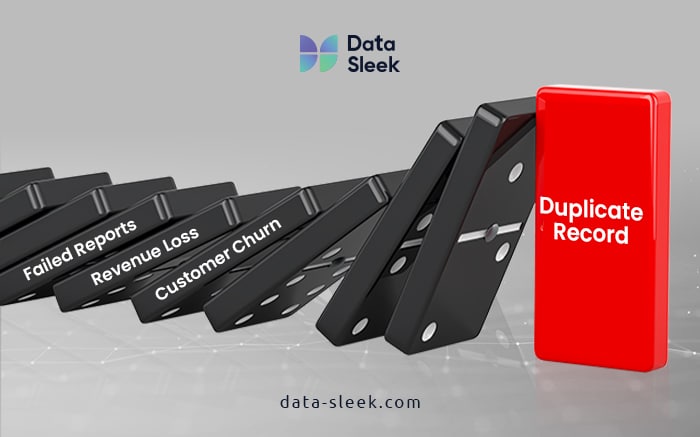
Operations teams rely on data to optimize workflows, enhance productivity, and ensure that tasks are aligned with overall business objectives. Thus, a seamless flow of accurate information across departments is imperative for maintaining operational efficiency and driving the organization toward its goals.
Analytics / BI
Maximize your team’s effectiveness by customizing your data quality KPIs today! Elevate your Business Intelligence and Analytics by ensuring your models train on the most highly-validated data. Don’t let outdated inputs hinder your success—take action now to enhance your data management strategies! Contact us and speak with a data management expert to get started!
Tools and Techniques for Measuring Data Quality
Manual Auditing vs. Automated Monitoring
Choosing the right method matters immensely, especially depending on your business setup. Manual controls depend on human actions, such as validating the credentials of data center visitors before granting physical access. Automated controls, on the other hand, utilize electronic actions, like securing data center access through a biometric scan that is restricted to authorized personnel.
Automated Controls
Pros: Consistent and efficient, integrates with business software, reduces risk of circumvention, enhances segregation of duties, and improves information availability.
Cons: Depends on design/programming, limited to specific objectives, relies on potentially inaccurate systems, risks unauthorized access or data loss, and may require new technology investment. Best for high-volume, similar transactions.
Manual Controls
Pros: Can monitor automated controls, allows for nuanced judgment, and incorporates professional skepticism.
Cons: Prone to human error, easily overridden, less consistent, and more vulnerable to collusion and fraud. Suited for areas needing discretion.
Sample Data Quality Tools and Platforms
A data quality tool is an essential software solution that guarantees the accuracy, reliability, and trustworthiness of your data. Ensuring high-quality data is crucial for informed decision-making and driving success in any organization. Popular platforms like Talend Data Fabric offer users a complete set of tools for data integration, quality, and governance, including data profiling, cleansing, matching, and monitoring features. Other notable programs include Ataccama ONE Data Quality Suite. This provider offers a unified platform for data quality, governance, and master data management, leveraging AI for automation and offering real-time reporting. Other notable tools include Great Expectations and OpenRefine, both of which are open-source options of your business.
Tracking KPIs Over Time
Benchmarks are the standard for measuring the success of a given business. Therefore, benchmarking is essential for establishing standards for your operation. Having definitive guidelines against information from your competition, as it relates to your strategic goals or compared to historical data, means that your company stands to gain actionable and accurate information.
The process of benchmarking involves identifying vital KPIs, selecting realistic business targets, and choosing appropriate timeframes for analyzing data. By clearly communicating your business targets within your organization and incorporating valid historical data, your company can establish metrics for multiple areas. Said areas include Customer Success, Marketing, Operations, and Sales.
Data Quality Dimensions vs. Metrics vs. KPIs: What’s the Difference?
| Hierarchy | Function |
| Data Quality Dimensions: These foundational categories include aspects like Accuracy, Completeness, Consistency, Timeliness, Uniqueness, and Validity, providing a broad framework for evaluation. | Data Quality Dimensions: Establish criteria for quality data and serve as benchmarks for comparison. |
| Data Quality Dimensions: These foundational categories include aspects like Accuracy, Completeness, Consistency, Timeliness, Uniqueness, and Validity, providing a broad framework for evaluation. | Data Quality Metrics: Provide measurable data points reflecting the status of dimensions and support ongoing monitoring for improvement. |
| Key Performance Indicators (KPIs): These are specific metrics aligned with business goals, such as the percentage reduction in data entry errors (Accuracy) and customer retention rates influenced by data quality (Uniqueness). | KPIs: Align data quality assessments with organizational goals and enable tracking of performance to inform strategic decisions. |
How to Build a KPI-Driven Data Quality Strategy
Define Ownership (Data Stewards / Engineers / Analysts)
Data stewards ensure that data is accurate and secure within an organization, setting rules for data management, ensuring compliance with relevant laws, managing data effectively, and connecting data teams with business units. Data Engineers create and maintain the systems for storing and processing data. They build efficient data pipelines and data warehouses to make data easily accessible. Data Analysts review data constantly for insights to help make actionable decisions using statistical tools to identify trends, create visualizations, and present their findings to stakeholders.
How Data Sleek Helps Improve Data Quality KPIs
Data Sleek’s consulting and engineering services assist companies in defining, tracking, and enhancing their Key Performance Indicators (KPIs) through effective strategy and the right tools. Our Data Strategy services can help you establish a robust framework for measurement. Clear data quality KPIs empower your team to trust their data and make quicker, more informed decisions. Let Data Sleek partner with you to develop a measurement framework that works for your organization and schedule your free consultation.
FAQs:
How do I choose the most relevant data quality KPI for my team?
Determine relevant KPIs that will serve as quantitative metrics for performance based on your business objectives.
What is the best way to track data downtime as a KPI?
By measuring the number of data incidents, as well as the time taken to detect and resolve them.
How can I improve accuracy and completeness in my data metrics?
By implementing data quality initiatives, establishing standards for data collection, and automating validation checks.
Why is monitoring dark data important for overall data quality?
Monitoring dark data is essential for identifying potential issues related to data quality, security risks, and missed opportunities. Comparing the total number of data points to the errors, you can assess the dataset’s quality.


